While the state government is ensuring residents don’t get “ripped off at the pump,” locals cannot fill up their tank close to home for less than $2 a litre, prompting anger at petrol companies.
As the war in Iran continues, oil prices have surged. Monday saw a peak of over $100 USD a barrel, the first time the market has broken the triple-digit threshold since the start of the Ukraine-Russia war in 2022.
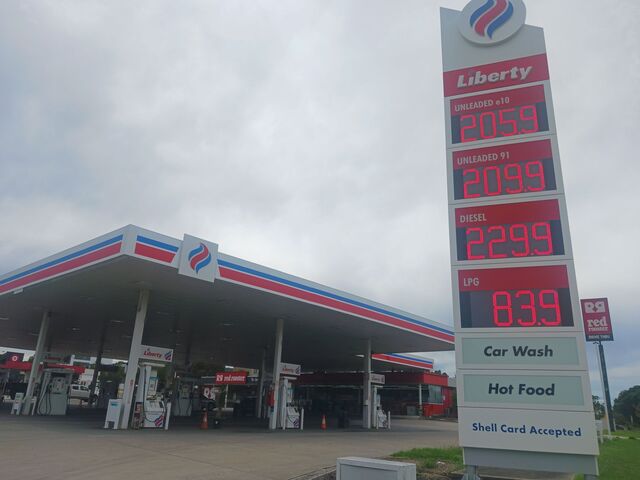
On the morning of Wednesday 11 March, all local servos are trading petrol for over $2 a litre. The lowest price in Pakenham is 209.9. In Officer, the lowest price is 10 cents more at 219.9 a litre. The highest in both suburbs is 229.9 a litre.
For diesel, the lowest price in Pakenham is 217.9. The lowest in Officer is 239.9. The peak price for both suburbs is 249.9.
Locals expressed anger at petrol companies, claiming the conflict in the Middle East has been used as an excuse to hike prices.
“They put the fuel up the minute they heard about it when they already still had fuel … makes no sense and isn’t fair at all on anyone,” one local said on the Pakenham Gazette’s social media.
Others said they are driving less and relying more on public transport to save money.
The Victorian Automotive Chamber of Commerce (VACC) emphasised that the vast majority of prices are beyond the control of service stations, saying that they face pressure on both ends as suppliers raise costs and customer frustrations grow.
“Service stations are price-takers, not price-makers. When global markets move, retailers feel it immediately — but they have almost no capacity to cushion the blow for customers or for their own businesses,“ VACC CEO Peter Jones said.
“This is a genuine double squeeze. Costs go up, margins stay thin, and the person wearing all of that pressure is usually a small business owner and their team.“
The state government has introduced daily price caps on service stations in an attempt to curb price gouging.
Starting on Wednesday, servos are required to set their fuel price for the following day by 2pm, where it is published on Service Victoria’s Servo Saver by 4pm.
The price will come into effect at 6am the following day and will remain in place for 24 hours unless the service station chooses to lower the price.
If the price is increased beyond what was originally set during this period, the service station may face a fine of more than $3,000. That fine can increase to $24,000 if taken to court.
Servo Saver provides a map of all current prices and directs users to the lowest price in their area.
The federal government on Tuesday held a meeting of the new fuel taskforce, a government grouping with key industries such as transport, to address supply chain issues.
Energy Minister Chris Bowen maintained that fuel imports are arriving as expected and that rising prices were due to panic buying and increased demand.
Minimum reserve requirements are in place if needed. The main concern of the federal government now is meeting current demand, especially from farmers.
“The key message is that, while there are challenges and uncertainties in all international supply chains at the moment, the preparations the government has put in place for the minimum stock obligation are working,” he said.
“If it’s necessary to access those minimum supplies, we will, but we’re not there at this point.”
Suppliers are required to hold minimum reserves of petroleum products. Refiners must hold 24 days’ worth of usual demand for petrol and 20 days’ worth of diesel supply. Importers, who account for around 90 per cent of the country’s fuel supply, must keep reserve stocks of petrol and diesel worth 27 and 32 days, respectively.