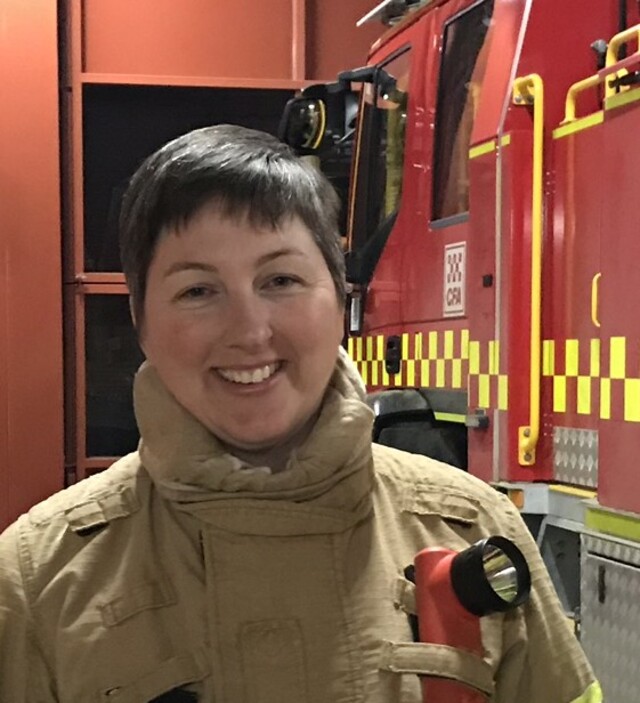
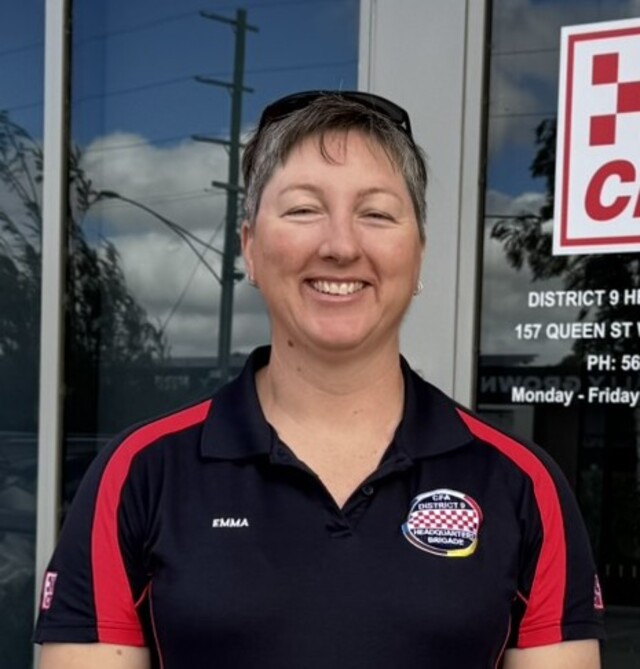
Yarragon South’s Emma Louise Conway has been awarded the Australian Fire Service Medal (AFSM) for over 20 years of frontline firefighting, leadership, and emergency service excellence.
The AFSM is one of the highest honours within Australia’s emergency services, awarded to individuals who demonstrate exceptional dedication and impact.
For Ms Conway, the recognition reflects more than 21 years of service in both volunteer and staff roles with the Country Fire Authority (CFA), Fire Rescue Victoria and the Australasian Fire and Emergency Service Authorities Council (AFAC).
Now serving as Deputy Director of Operations at AFAC and continuing as a CFA volunteer, Ms Conway has played a pivotal role in major emergency responses while also helping shape national operational capability and collaboration across Australia and New Zealand.
Learning of the AFSM came as a complete surprise.
“I was actually at a workshop in Germany when I found out I’d been nominated,” she said.
“I had no inkling at all. Since I’d left the fire agencies, recognition wasn’t something I expected, so it was overwhelming in the best possible way.
“To know that people I’ve worked with valued my contribution enough to take the time to put together a nomination means a great deal.”
Born in Melbourne and raised largely in Gippsland, Ms Conway is the eldest of three children and grew up immersed in emergency services culture. Her father joined the CFA when she was seven, beginning a lifelong family connection to firefighting.
“We’ve been a CFA family pretty much my whole life,” she said.
Homeschooled through her secondary years, Ms Conway completed a TAFE electronics certificate at just 15 before joining the Navy at 16. She went on to serve 12 years in the Navy in a range of technical and leadership roles, including weapons maintainer, diesel mechanic and recruit instructor, with two periods of active service in 2001 and 2002.
In 2007, she transitioned into the fire services, beginning a career that would see her work in frontline and hazardous roles across CFA Districts 9, 10 and 27. She was among the early cohort of female career firefighters within the CFA and progressed into senior operational leadership roles during major emergencies.
Ms Conway has made a significant contribution to emergency management through her frontline leadership during critical incidents, including the 2019–20 Black Summer bushfires.
Based in Swift Creek for more than six weeks as Deputy Operations Officer and Deputy Incident Controller, she described the experience as both challenging and rewarding.
“To work so closely with a team through those conditions brings people together in a really powerful way,” she said.
“It didn’t matter whether you were CFA, Fire Rescue Victoria or international crews — everyone was part of the same team.
“But with that comes responsibility. Every person you send out matters and bringing them home safely is everything.”
She is progressing toward Level 3 accreditation in both planning and incident control in Victoria, a notable achievement that places her among a small cohort of women with this dual qualification.
Her operational excellence, strategic leadership, and resilience under pressure have earned the respect of peers and stakeholders across jurisdictions.
Beyond incident response, Ms Conway has made a significant contribution to leadership development, volunteer capability and workforce culture across the emergency management sector.
She has actively championed youth engagement, women in leadership and diversity and inclusion initiatives, grounded in a belief that strong outcomes come from recognising and harnessing different perspectives.
Her leadership during major emergencies, commitment to volunteer and workforce development, and advocacy for inclusion and diversity mark her as an outstanding role model.
She has contributed significantly to the safety and wellbeing of communities across Victoria through more than two decades of frontline and strategic service.
While often described as a trailblazer, her experience was defined less by gender and more by the realities of the job.
“I didn’t experience challenges as a female firefighter — I had challenges as a firefighter,” Ms Conway said.
“The personal challenges came from the experiences I’ve had and some of the events I’ve been part of. You get this feeling that you should always be doing more, even when it’s not physically possible.
“It’s hard to see communities being impacted by these events, knowing there’s only so much you can do that will truly make a difference.
“I was very fortunate that the people I worked with were supportive and encouraging of me as a person, and that I was given opportunities to challenge myself.”
For Ms Conway, legacy is not about titles or accolades, but about the people who carry the work forward.
“CFA isn’t a single person — it’s people coming together to do their part,” she said.
“What I hope to leave behind is a culture where people believe their voice matters and their contribution is valued.
“Through volunteer brigades, we build connection, belonging and community resilience. CFA has always been a community-building organisation, and that sense of empowerment is something worth protecting.
“CFA is certainly not the only volunteer organisation, and there are many ways people can contribute and make a difference.”