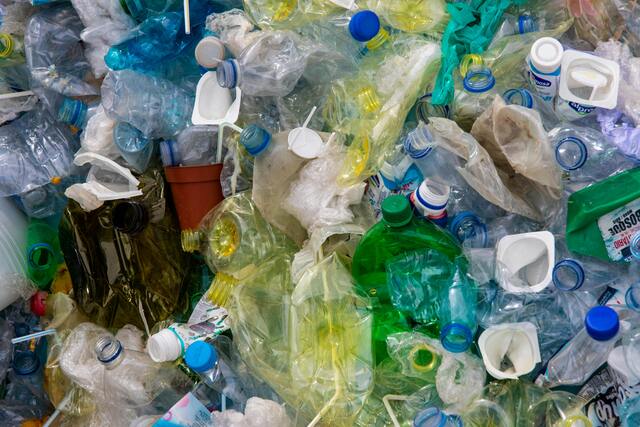
Even though the state government is boosting plastic recycling capacity in areas such as Pakenham, a new report has found that plastic waste is still increasing, placing further burden on councils and ratepayers.
The report Securing Australia’s Plastic Recycling Future by the Australian Council of Recyclers and the Australian Packaging Covenant Organisation, released last week, found that plastic waste is increasing and that the majority is still going to landfill, despite commitments by both state and federal governments to reform the distribution and use of plastics.
Of the 4.2 million tonnes of plastic currently used in Australia, 1.3 million tonnes are accounted for by packaging. The report calls for national packaging reform to divert industry away from cheaper plastic imports and towards domestic recyclable initiatives.
The Australian Local Government Association said plastic waste will continue to become an increasing burden, with the report finding that plastic waste in landfill could grow from 2.7 million tonnes to 4.9 million tonnes.
“Councils and ratepayers already carry a significant cost burden,” ALGA President Mayor Matt Burnett said.
“They can’t afford to bear the additional cost of doing nothing.”
Governments are boosting recycling capacity as part of promised reform initiatives, including the state government’s new policy, Recycling Victoria: A New Economy.
A $4 million funding package has been initiated to upgrade four recycling plants, including facilities in Dandenong and Pakenham.
The joint project between the state and federal governments aims to boost annual plastic recycling by 16,700 tonnes.
Advocates for reform say the increased capacity cannot be utilised without regulatory measures that place more responsibility on the private sector.
“Investments in domestic recycling were made in anticipation of a mandatory national scheme, a promise yet to be fulfilled,” Mayor Burnett said.
“Regulatory uncertainty now threatens the entire system, with some recyclers considering withdrawal from services, which could increase landfill and restart stockpiling.”
Cardinia Shire Council said the biggest contributor to litter in the local area is smaller packaging used for direct consumption, such as shopping bags.
Council Manager of Infrastructure and Environment Peter Benazic said reforming the use of such items in industry would be supported by the council.
“Soft plastics such as shopping bags and chip packets are the largest contaminant in Cardinia Shire Council recycling bins and a major contributor to environmental litter,” Mr Benazic said.
“Council supports reforms that place responsibility for the production of problematic items on manufacturers and major retailers and support solutions that make recycling simpler for residents.”
The state government has implemented the use of recyclable plastics on public projects and supports wider regulation at a national level.
“Victoria recognises the significant impact of plastic pollution and supports national action on plastic packaging. We continue to advocate to the Australian Government to prioritise reform of Australia’s packaging regulation,” a spokesperson said.
“We are leading the way to tackle plastic pollution and prepare for a national product stewardship scheme for packaging, including by investing $65.9 million across more than 100 projects to improve plastic recycling in Victoria.”
The federal Department of Climate Change, Energy, the Environment and Water is considering possible future regulation of packaging, and Environment Minister Murray Watt said the transition to a circular economy is “well underway.”
“Over 60 new and upgraded recycling infrastructure projects have now been completed, with an additional 60 in the pipeline. More than half of these projects support solutions for plastics, including plastics that are hard to recycle,” he said.
“We want to see all businesses take responsibility for the environmental impacts of their packaging as we transition to a circular economy. Taking action now to increase the recyclability of packaging, reduce unnecessary and problematic packaging, and use recycled content will ensure businesses are well placed for any future regulations.”