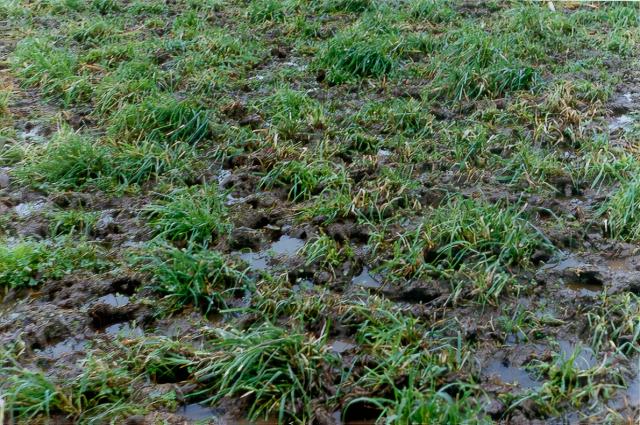
Pastures affected by flooding and severe waterlogging will need some extra care this season to re-establish healthy, productive pastures.
By focusing on soil testing, soil temperatures, seed depth, irrigation, weed control and grazing management, this will all help with pasture re-establishment.
Soil testing is highly recommended. After flooding, sandy soils can have issues with leaching of various nutrients, such as sulphur, potassium and nitrogen. Heavy soils that have been inundated for prolonged periods; denitrification can occur.
Previously planned fertiliser applications may need to be adjusted to suit. The soil test may also indicate the need for gypsum application to help build and protect soil structure.
Soil temperature is a critical aspect of any pasture establishment. The ideal soil temperature for sowing varies depending on the species. For ryegrass and clovers, the ideal soil temperature for germination is between 20 and 25 degrees Celsius. Persian and Shaftall clover can withstand higher soil temperatures of up to 35. Oats have an ideal soil temperature range of between 10 and 25, while wheat and barley prefer temperatures a couple of degrees lower than oats.
If you are unsure of soil temperatures, a good rule of thumb for ryegrass and clover is to sow when daily maximum air temperatures for five consecutive days average less than 25. Above these temperatures, seeding establishment is reduced significantly and pastures may need to be resown.
The sowing depth of seed is proportional to the seed size. A general rule of sowing is that sowing depth should be twice the length of the seed. For example, ryegrass seed should be sown at 1-2 cm depth. If seed is sown too deep, it will increase the time it takes to emerge, or it may fail to emerge at all.
To achieve a dense, productive pasture aim for plant densities of 600 seedlings/m2. Plant densities should be measured one week post emergence. If the plant density is below 600 seedlings/m2, action may be required.
Pasture with counts lower than 80 per cent will require more drastic action to perform at their best. Newly established seedlings are more susceptible to moisture stress than established plants.
Depending on the season, the first irrigation will typically use 1.5 ML/ha with subsequent irrigations requiring 0.5 ML/ha, depending on soil type and irrigation layout.
After the pasture sward is established, the first grazing is crucial to get right, as it can set the pasture up for the remainder of the season. The pasture should be 10cm high and at least at the two-leaf stage.
Before grazing check if the root system is developed enough by using the ‘pluck test’. To complete a ‘pluck test’, take a tiller between your fingers and pull in a motion to mimic a hungry cow’s bite. If it tears without pulling the plant out of the ground, it is ready to graze.
Graze pastures to a residual height of 4-6 cm. This will help promote tillering, minimise damage to the pasture and set the residual height for future grazings. On-off grazing should be used to help achieve residuals of 4-6 cm when first grazing new pastures.
It is vital to get the basics of pasture establishment and grazing right to ensure the best result possible and produce healthy productive pastures.
For more information, visit agriculture.vic.gov.au/farm-management/land-and-pasture-management