By LACHLAN MOORHEAD
BAD blood has developed between the Federal Government and a pharmaceutical company over subsidies for a lifesaving drug.
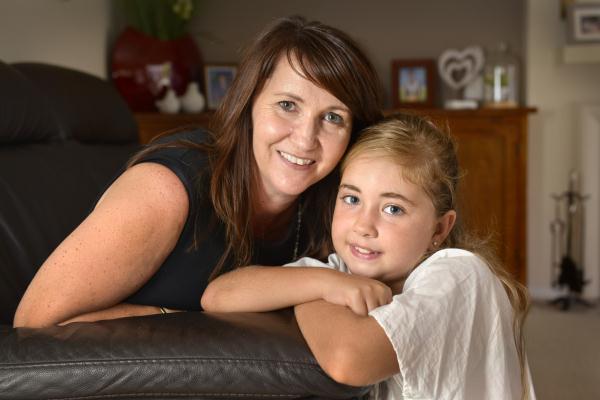
It comes after the News reported in March on concerned mother Linda Van de Loop who was championing for the government to place the drug, Soliris, on the Pharmaceutical Benefits Scheme (PBS).
Ms Van de Loop’s nine-year-old daughter, Holly, previously suffered from atypical haemolytic uraemic syndrome (aHUS) in 2012, a rare blood disease for which Soliris is the most effective treatment.
Months of negotiations between the government and Alexion have followed a Pharmaceutical Benefits Advisory Committee (PBAC) recommendation in April that Soliris be subsidised.
Without subsidisation Soliris is estimated to cost Australian patients roughly $500,000 a year.
But Alexion Pharmaceuticals on Friday slammed the Federal Government for wanting to proceed with a PBAC recommendation that it believed would see patients who are given subsidised access to Soliris made to mandatorily discontinue the treatment after one year.
In a statement on Friday, Alexion Australasia managing director David Kwasha slammed the current listing recommendation and said the pharmaceutical company wanted a resolution in which patients would receive sustained access to reimbursed Soliris.
He said the decision as to whether treatment should be continued after 12 months should be left to the treating physician who has expertise in aHUS, not the government.
“Alexion has repeatedly agreed to supply Soliris immediately and today reiterates its agreement to supply Soliris immediately if the government agrees to either humane treatment conditions for patients or allows physicians to determine their aHUS patients’ medical needs,” Mr Kwasha said on Friday.
“While the government continues to insist that all patients stop therapy as a cost-savings measure, Alexion continues to offer substantial cost-containment and budget management measures as long as the Australian Government agrees to either institute humane conditions or leave these critical treatment decisions to the physician and patient.
“Alexion firmly believes that Australians with aHUS deserve a long-term solution that is based on sound medical evidence, not budget savings.”
PBAC Associate Professor Suzanne Hill hit back at Alexion’s claims on Friday.
“We have not recommended that all patients must stop receiving treatment after 12 months,” Ms Hill said.
“Atypical HUS is a severe and in some patients life-threatening disease.
“However, it is not a single disease. There are a mix of causes and the scientists studying this disease still do not fully understand it.
“Treatment with Soliris works in some patients – but in some patients it does not.”
Ms Hill said PBAC has recommended patients be reviewed after six months of Soliris treatment, then again at 12 months.
“If a patient is responding well but does not have the disease fully under control, they will continue to receive subsidised treatment as long as it is needed to maintain their health and as long as they continue to improve,” she said.
“However, if the tests show that a patient has achieved remission of the disease, based on criteria developed with experts in this field, the PBAC has advised that the treatment should stop and the patient’s condition monitored.
“This is good standard clinical practice. You do not give people drugs unless you absolutely have to as all drugs have side effects.”
“If at any time that standard clinical monitoring shows the slightest reduction in health and therefore a patient is starting to relapse, even just an abnormal blood test, then the PBAC has recommended that the patient be reinitiated on treatment immediately, under simplified criteria.”
Ms Van de Loop said in her daughter’s case, whose aHUS is in remission, a 12-month treatment would be appropriate.
But she believed a patient’s doctor should still have the final say.
“I know some people need it for the rest of their lives to survive but in Holly’s case 12 months would be OK because it’s in remission,” she said.
“Just get it through so if people need it they can have it.
“Holly doesn’t currently have active aHUS in her system but if it does come back we want access to the Soliris.”