Capitalising on the spring surplus will be critical on farms this year. While some things are out of our control, focusing on key factors will help ensure that you get the best possible return.
Five key factors for silage this season are:
1. Only lock up pasture that is surplus to requirements.
Making silage can be an expensive exercise, so it only makes sense when pasture growth exceeds animal requirements. In a reasonable year on most farms, this generally occurs in early to mid-September.
2. Use nitrogen (N) to increase dry matter yield but cut pasture within 6 weeks of application.
Once cutting is delayed beyond 6 weeks, the quality of the silage declines more rapidly than if no nitrogen is applied and this can result in large quantities of low-quality silage which is unsuitable to feed cows in the early stage of lactation.
By using rates of nitrogen up to 50 kg N/ha, responses of 18 kg DM/ha for every kg N applied, six weeks after application can be produced.
3. Be prepared to cut pasture when the ryegrass component of the sward is just reaching early ear emergence.
Ideally, the plan is to cut pasture when the ryegrass component of the sward is at early ear emergence.
Due to the seasonal conditions this year, it is more likely that paddocks will be cut at a range of times, for example, when it is still vegetive or later than early ear emergence.
As a result, it will be critical to ensure that the forage hits dry matter targets quickly, so it doesn’t lose quality.
4. Use tedders to increase the drying rate of cut material and so reduce the wilting period.
It has been shown that the use of tedders has a beneficial effect on both final silage metabolisable energy and crude protein. The length of the wilting period will be dictated by the type of silage to be made and weather conditions.
Given reasonable drying conditions material should be ready for pit silage within 48 hours and for bale silage within 72 hours.
5. Ensile material quickly and seal well.
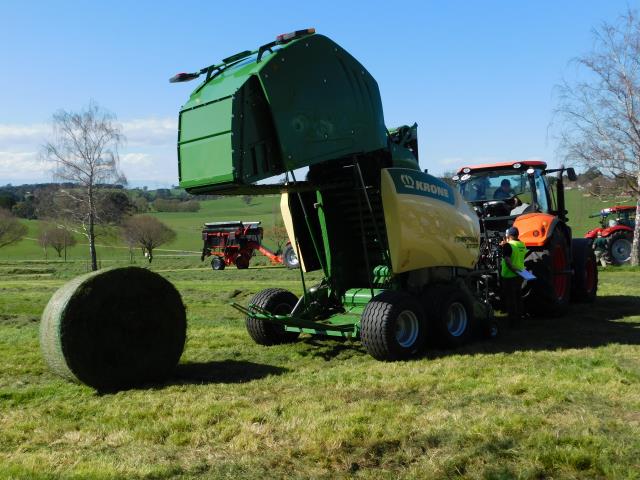
It’s important to ensure that the material being ensiled is tightly packed into either a pit or the bale and that it is sealed promptly.
The ideal dry matter of pasture for pit silage is 30%, any lower and effluent may be a problem, and any higher compaction may be difficult.
The dry matter percentage of bale silage should be about 45 – 50%. At this dry matter a reasonable fermentation should occur, and it reduces the chance of spoilage.
For more information about drought support visit www.agriculture.vic.gov.au/drought or call 136 186.